

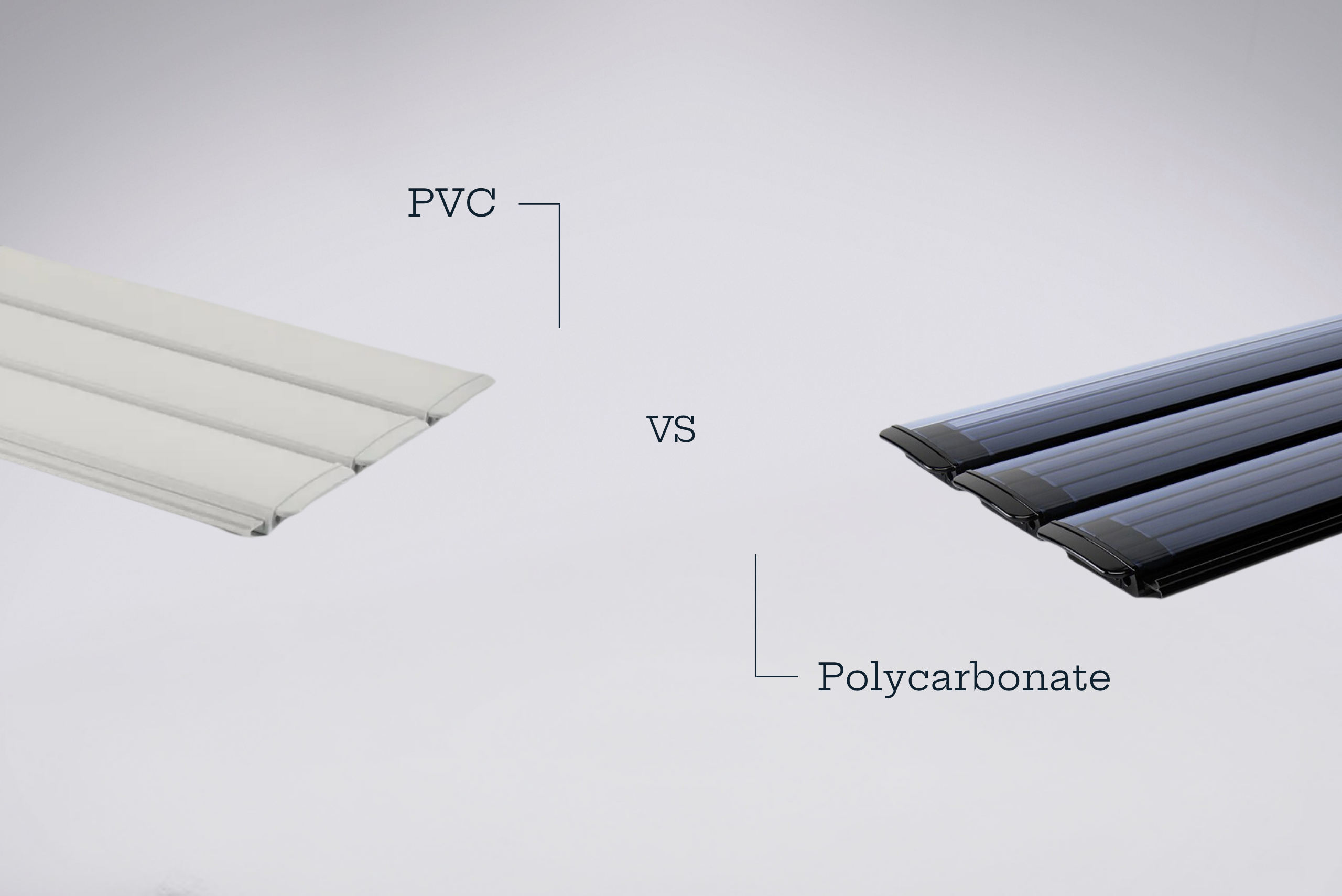
When choosing a pool cover, color and appearance often play an important role. A grey slat gives the pool a timeless look that fits well in most gardens. But besides aesthetics, there are also technical differences between them. PVC en polycarbonate which you should not lose sight of.
The difference is in the properties
PVC slats are a budget-friendly solution with good insulating properties. However, PVC has limitations: the material is less impact-resistant and heat-resistant. The so-called Vicat temperature The temperature of PVC is around 60°C. If the slats get hotter, there's a risk of permanent deformation. In practice, this means that at an outdoor temperature of 30°C, the surface of a slat exposed to sunlight can quickly reach 60°C.
Dark pigments, such as those in grey, absorb more heat. In combination with certain pool conditions, this can lead to excessively high temperatures in the slats. Consider the following:
- Overflow pools
- Safety edges
- Stairs or steps
- Coverings in greenhouses or under glass structures
- Dark pigment colours in the PVC (such as grey)
Polycarbonate slats have been developed to better meet these challenges. They have a much higher heat resistance (up to approximately 160°C), are more impact-resistant, and also hail-resistant. This makes them a sustainable choice for situations where conditions can be critical.
Why conscious material choice is important
A pool cover is more than just a nice detail around the pool. It's a functional component that contributes to safety, water and energy savings, and comfort. Choosing the right material prevents long-term disappointments and ensures the cover continues to function properly – even under challenging conditions.
Our vision at (Re)Cover
We believe it's important to properly inform our customers about the differences between PVC and polycarbonate. Both materials have their own specific properties, but they're not equally suitable for every situation. By considering the pool's specific requirements together, we'll find the best solution – aesthetically, technically, and sustainably.
For projects where a grey look is desired, we also have a grey version in addition to the traditional PVC version.opaque grey polycarbonate slatdeveloped. This way, you can count on the look you want, combined with the robust properties of polycarbonate.
Consultancy
Not sure if PVC is the best choice for your project? Our team is ready to assist you and offer advice. Together, we'll ensure every pool cover meets your needs and can withstand future conditions.


